

Renewables surge, import volumes contract, and a risky 2026 horizon looms — India’s coal
landscape is undergoing a structural reset.
Overview
India’s coal sector is entering a period of structural transformation. While domestic coal production remains relatively stable, demand patterns are shifting significantly. The power sector, traditionally the largest consumer of coal, is showing signs of slowing demand, while industrial sectors such as steel and cement continue to increase consumption. At the same time, renewable energy expansion is accelerating, reducing reliance on thermal coal and influencing import dynamics.
Domestic Coal Production Remains Stable
India produced 107.96 million tonnes (MT) of coal in January 2025, representing a 3.23% year-on-year increase. Coal India Limited (CIL) contributed 79.81 MT, while captive and other mines recorded strong growth, reaching 23 MT, up nearly 16%.
However, cumulative production during April 2025 to January 2026 stood at 829.6 MT, slightly below the 830.9 MT produced during the same period in the previous fiscal year, indicating that production growth may be reaching a plateau.
Coal Production (April 2025 – January 2026)
| Producer | Production (MT) | YoY Growth |
|---|---|---|
| Coal India Ltd. (CIL) | 609.0 | -1.96% |
| SCCL | 48.88 | -9.02% |
| Captive & Other Mines | 171.73 | +10.07% |
| Total | 829.62 | -0.15% |
Coal Consumption Patterns Are Changing
The most notable trend is the divergence in coal demand across sectors.
Power Sector Weakens
Coal dispatch to the power sector declined by 2.98% in January 2025 and was down 3.72% for the fiscal year-to-date period.
Industrial Demand Strengthens
Industrial sectors continue to consume more coal:
- Steel: +37.73% growth in January dispatches
- Cement: +4.09% growth
- Captive Power Plants (CPP): +21.58% growth during FY26 YTD
- Sponge Iron: -42.66% decline during FY26 YTD, indicating sector-specific challenges
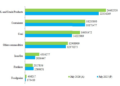
Coal Dispatch by Sector (April 2025 – January 2026)
| Sector | Dispatch | YoY% Growth |
|---|---|---|
| Power | 661.69 | -3.72% |
| CPP | 70.12 | +21.58% |
| Steel | 14.09 | +36.96% |
| Cement | 8.23 | +22.06% |
| Sponge Iron | 6.93 | -42.66% |
| Others | 73.00 | +3.05% |
Renewable Energy Is Reshaping Thermal Coal Demand
India’s renewable energy expansion is increasingly impacting thermal coal consumption.
Several factors contributed to weaker coal demand:
- Extended monsoon conditions in 2025
- A relatively mild summer season
- Rapid growth in renewable energy generation
Power demand growth remained limited at just 0.9%, while renewable generation increased by 22% year-on-year. India added a record 41 GW of renewable capacity in 2025, compared with only 9 GW of new coal capacity.
As a result:
- Coal-based power generation fell 4% to 1,055 billion units
- Coal inventories increased at power plants and ports
- Non-coking coal imports declined by 5% to 135 MT
Coal Imports Continue to Shift
Top Coal Importers (April 2025 – January 2026)
| Company | Import Volume (MT) |
|---|---|
| Adani Enterprises Ltd. | 31.38 |
| JSW Group | 25.09 |
| Tata Group | 16.48 |
| Steel Authority of India Ltd. | 11.69 |
| Jindal Group | 7.11 |
| Agarwal Coal Corp. | 6.84 |
| Aditya Birla Global Trading Pvt. Ltd. | 4.11 |
| Bhushan Power & Steel Ltd. | 3.90 |
| Rashtriya Ispat Nigam Ltd. | 3.59 |
| UltraTech Cement Ltd. | 3.27 |
Import Source Diversification
Indonesia remains India’s largest thermal coal supplier, accounting for roughly 60% of imports, though shipments fell 8% to 80 MT.
Meanwhile:
- US coal imports increased 16%
- Russian coal imports increased 25%
This reflects India’s efforts to diversify supply sources while benefiting from competitive pricing.
Coking Coal Demand Driven by Steel Expansion
Unlike thermal coal, coking coal demand remains structurally strong due to India’s long-term steel production ambitions.
Key developments include:
- Coking coal imports declined marginally from 58.8 MT to 57.6 MT
- Import value fell 22% to ₹1,032 billion, reflecting lower global prices
- Australia remains the largest supplier with 24.6 MT
- Russian imports increased significantly from 5.5 MT to 8.2 MT
- US imports reached 8.5 MT
India has also designated coking coal as a critical mineral, supporting overseas mine investments and long-term supply agreements aimed at achieving 300 MT of steel-making capacity by the early 2030s.
Industry estimates suggest that every additional 10 MT of steel capacity requires 7-8 MT of coking coal, making continued import dependence likely through 2030.
2026 Outlook: Opportunities and Risks
India’s coal market faces several important uncertainties heading into 2026.
Key Risks
1. Indonesian Production Cuts
Indonesia is considering reducing coal production by 40-70% to support global prices. Any major reduction could significantly affect India’s thermal coal supply chain.
2. Potential El Niño Impact
Meteorologists have warned of a possible El Niño event later in the year, which could lead to:
- Severe heatwaves
- Reduced hydropower generation
- Lower monsoon rainfall
- Higher electricity demand for cooling
The Balancing Act Ahead
If Indonesian supply tightens while power demand rises sharply due to weather conditions, India could quickly shift from excess inventories to a thermal coal shortage. At the same time, the country’s transition toward renewable energy continues to accelerate. Managing this balance between energy security, industrial growth, and clean energy expansion will be a defining challenge for India’s energy strategy in the years ahead.